

Can We Have New Bad Things?
“Fascism” has become a thought-terminating concept, giving liberals license to embrace their fear and loathing of working people who disagree with them.
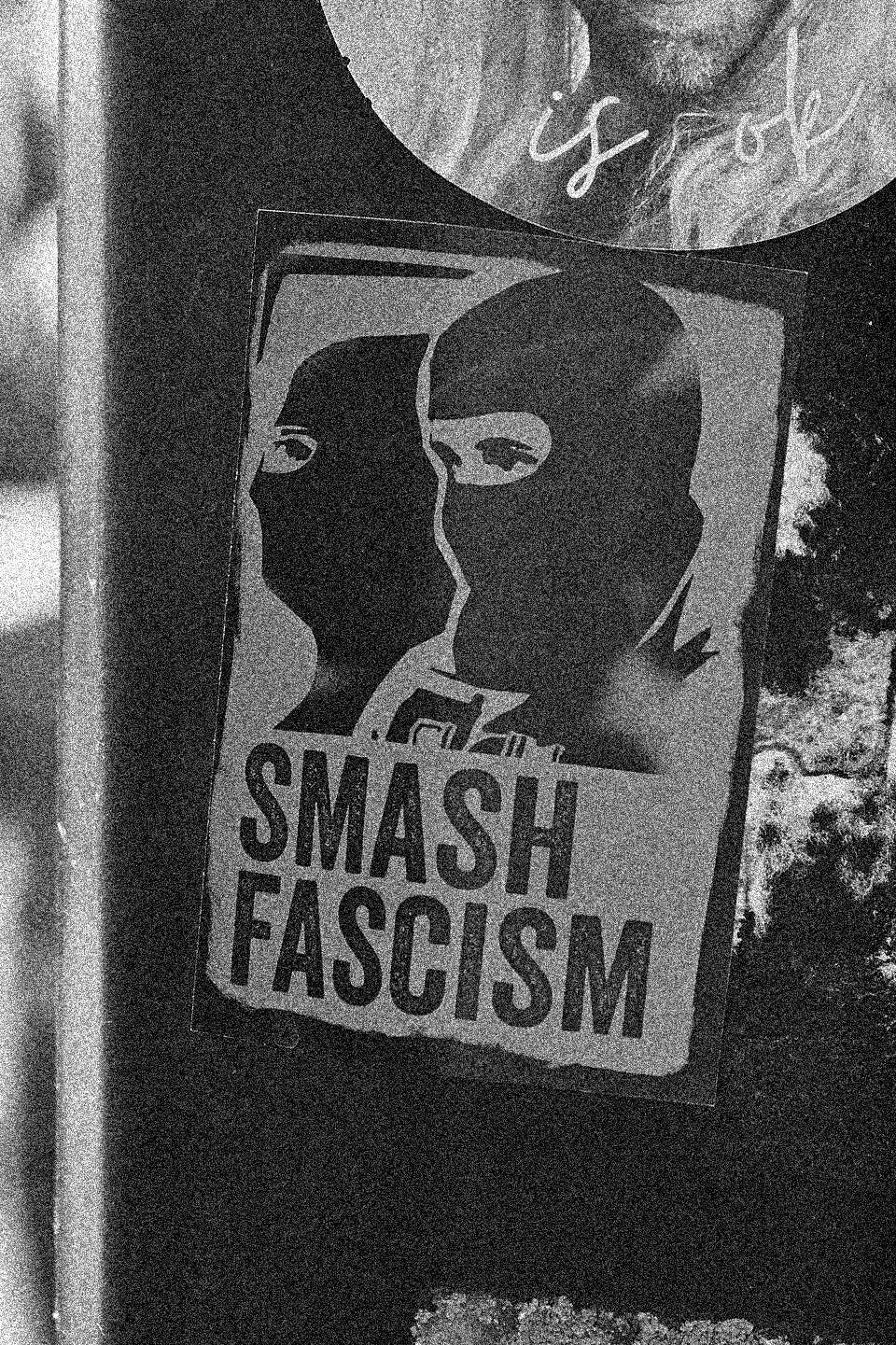
John Ganz, a left-wing analyst and author of the popular newsletter Unpopular Front, recently chided the economic historian Adam Tooze for not yelling “Fascism!” enough. Ganz was “dismayed” at Tooze’s “haughty dismissal of the fascism thesis as beneath serious consideration.”
Here is Ganz:
Tooze, unlike the unlettered epigones of his position, admits the possible “usefulness” of the [fascism] analogy. I will go one further: it’s actually predictive. Fascism doubters said Jan 6 was unlikely, then said it was unimportant, then said this regime was weak and would not press its most authoritarian designs, and could not imagine something like Minnesota. But for all its supposed fatuousness and self-dramatization, the holders of the fascism thesis have not been surprised by any of this: this is, more or less, what they expected.
The problem with Ganz’s basic orientation here, no doubt shared by many left-liberals, is threefold.
First, there are all kinds of violent norm-smashing, democracy-disregarding regimes that aren’t fascist. And while these are less glamorous compared to fascism (because those analogies don’t cast liberals as heroic Resistance fighters against the Great Evil), they often bear a closer resemblance. For instance, American politics in the first Gilded Age was full of violent demagogues who used the state to further their personal political ends, who punished dissenters, killed protesters, and stirred up hate. America can be a very violent place. For a long time our political life was quite violent too—though, political violence here was, like everything else, more chaotic. It took several murderous confrontations with striking workers for Congress to finally pass a law in 1893 that prohibited the federal government from hiring private mercenaries to shoot and kill them. All of this was bad, but none of it reached the fever pitch (in murderous quantity or ideological quality) that characterizes fascism.
Second, as Tooze asks, “Why can’t we have new bad things?” Why is it so difficult for progressives to consider that we might be in a genuinely new moment? When Bertolt Brecht or Leon Trotsky wrote about fascism, their whole point was that this was a new phenomenon that had to be understood in new terms. They didn’t insist that Fascism was Bismarckianism or Neo-Napoleonism. Yet, today, we try to shoehorn everything that has happened into a mirror of something that has happened before. It’s a kind of inverse-Whiggishness, where we assume that we are bound to repeat the exact same nightmare. Until when, exactly? Are communist tanks meant to liberate us? And who will play the role of the United States?
Historical analogies can be helpful, of course. We’re pretty sure, for example, that the rise of nationalist populism all over the globe is in response to declining economic prospects of working people. We take this pretty straightforwardly from the experience of Europe in the interwar period. That’s helpful. But beyond this the fascism analogy serves more to obscure a political solution than illuminate one.
And that brings us to the third, and most important problem: yelling “fascism” doesn’t help us. Ganz insists that his “fascism thesis” ought to live or die by its predictive capacity—he and his followers are never surprised (and therefore, always smug) because their theory tells them that tomorrow will be worse. Good for them, but it doesn’t mean anything. Because the problem is not whether their thesis is predictive but whether the analogy helps us find a meaningful response to the political advance of the Right. In other words, the problem is primarily political.
At the tail end of her 2024 campaign, Kamala Harris gravely warned that a second Trump term “would be worse. There would be no one to stop his worst instincts. No guard rails.” She was right, and famously, that message failed. Harris lost the election. This not in spite of her prescient warnings, but, at least in part, because of them.
As the Center for Working Class Politics found, her “democratic threat” message was resoundingly unpopular. Especially with working-class voters. That’s no doubt because the #Resistance philosophy behind it dripped with condescension. It reminded everyone that liberals think Trump voters are a bunch of irredeemable fascists.
Ganz might argue that Harris’s failure was in pushing her democracy-mongering without an attendant economic agenda. In this way he could try to rescue the utility of his thesis. This won’t do. The social challenge is much more basic: if you think the person you are trying to win over is an Untouchable, they will smell your hatred from a mile away. Even if you insist that you just want to give them healthcare.
“Fascism” has become a thought-terminating concept for liberals. It’s the ultimate evil, and there is nothing that cannot be justified in the name of stopping it. As Tom Holland has compellingly argued, the specter of fascism now occupies the same role in our political psyche that transcendent Evil once did for more Christian societies. But if the fascists have replaced Satan in contemporary demonology, what does that make Trump voters? Here is our big problem. The key to defeating the Right is to persuade working people who currently disagree with the Left that we have good ways to fix their problems. We won’t do that if we fall back into the trap of insisting that they’re all “deplorables.” They’re not.
Liberals already suffer from a crippling inability to see Trump voters as fellow citizens and to appeal to them on the basis of shared interests. The “fascism thesis” only gives them license to embrace their fear and loathing when what we need is the exact opposite. If we want to defeat Trump, and the odious political forces he represents, we need to be able to think new thoughts, to confront new bad things, and develop new ways to persuade and organize a majority.
Dustin Guastella is Director of Operations for Teamsters Local 623 in Philadelphia and a Board Member of the Center for Working-Class Politics.